Australian origin · Global perspectiveNatural opals & distinctive gemsMelbourne, Australia

Know the stone.
Know the origin.

Education is part of the product. AUSTRALORA connects geology, regional identity, gemstone characteristics and transparent nomenclature so customers can make informed decisions.

Coober PedyLightning RidgeQLD Boulder FieldsNew EnglandCentral QLDMarlboroughEastern GoldfieldsMud Tank
Origin Atlas

Australia — a continent of colour

Explore selected Australian gemstone regions. The map is educational and illustrative rather than a mining-tenement map.

  • OpalSA · NSW · QLD
  • SapphireNSW · QLD
  • ChrysopraseQLD · WA
  • ZirconNT · NSW · QLD
Education · Australian Opal

Three major Australian opal identities

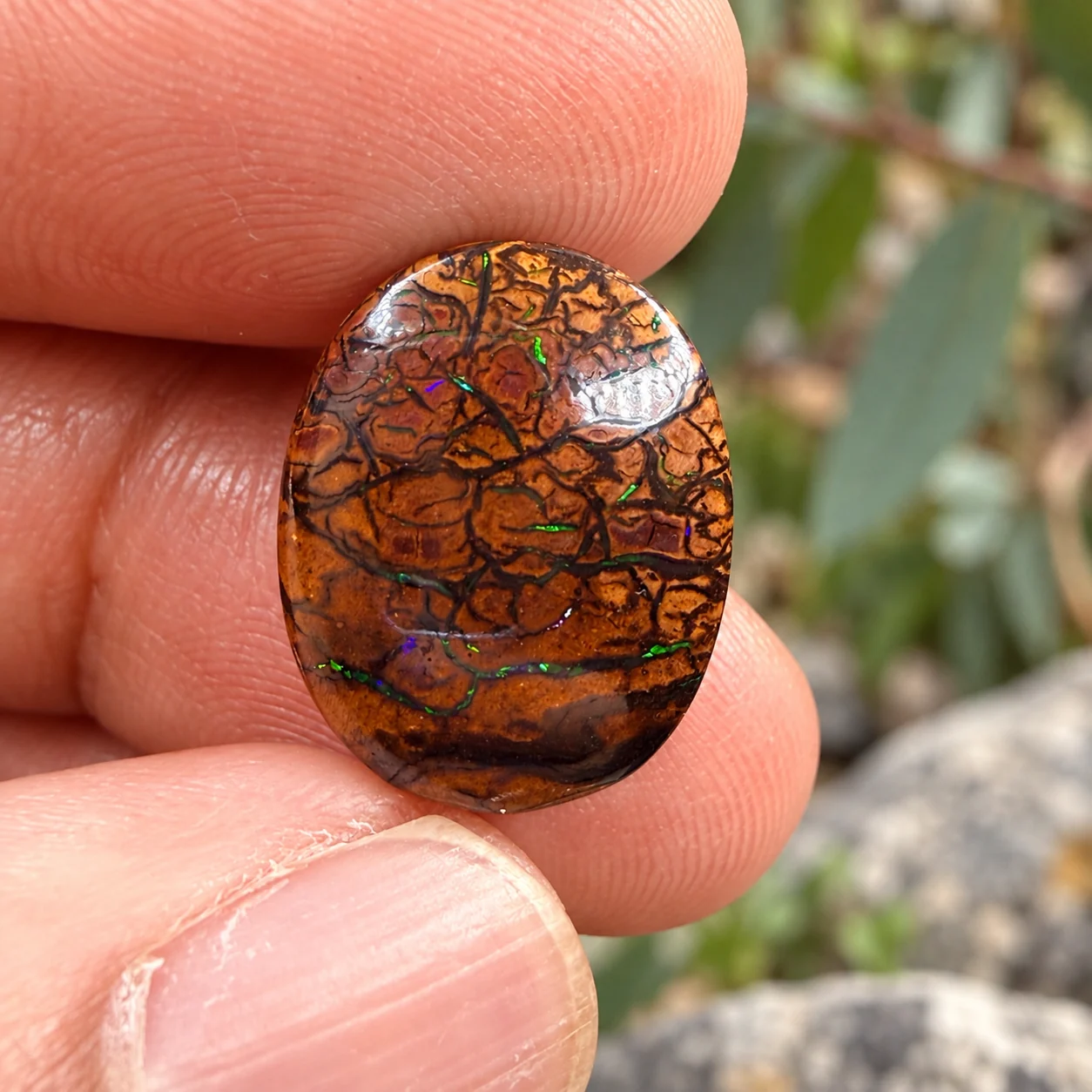
Australian precious opal is not one uniform product. Coober Pedy is best known for white/light and crystal opal; Lightning Ridge for black and dark opal; Queensland's long boulder-opal belt for precious opal associated with ironstone.

Why red matters

Opal play-of-colour comes from the organisation of silica spheres that diffract light. Geoscience Australia notes that predominantly red play-of-colour is rare, helping explain why strong red can command a premium when the overall stone quality supports it.

Solid, doublet and triplet

These terms describe construction, not simply quality. AUSTRALORA should state construction plainly so the buyer knows whether the piece is solid opal or a composite.

Education · Australian Sapphire

Australian sapphire is a palette, not a single blue.

Australia's principal historic sapphire areas include the New England district of New South Wales around Inverell and Glen Innes, and the Central Queensland Gemfields around Anakie, Sapphire and Rubyvale. Australian material can occur in blue, green, yellow and parti combinations.

Why the trade story matters

For AUSTRALORA, sapphire expands the brand beyond opal without losing Australian origin. It also creates a durable faceted-gem category suited to loose-stone B2B supply, bespoke rings and fine jewellery.

Education · Chrysoprase

Australia's apple-green chalcedony.

Chrysoprase is chalcedony coloured by nickel. Australian material is associated particularly with Marlborough in Queensland and the Eastern Goldfields of Western Australia, with fine material known for vivid clean green colour.

Use the terminology carefully

Material sold as “lemon chrysoprase” can refer to nickel-bearing magnesite rather than true chrysoprase. AUSTRALORA's trust positioning works best when material identity is stated precisely.

Education · Natural Zircon

Ancient mineral. Modern brilliance.

Natural zircon occurs in Australian alluvial deposits and is often found with sapphire. Geoscience Australia identifies Mud Tank in the Northern Territory as a well-known locality for gem-quality zircon, with gem material also occurring in New South Wales and Queensland.

Not cubic zirconia

Zircon is a natural zirconium silicate mineral. Cubic zirconia is a synthetic zirconium oxide material. Clear education is essential because the names are frequently confused.

Gem care

Different stones.
Different care.

A production site should include stone-specific care rather than one generic jewellery-care paragraph. Opal, sapphire, chrysoprase and zircon differ in hardness, toughness and sensitivity. AUSTRALORA product pages should surface the correct care guidance for the actual material and construction.